
Collecting to Dwell: Art and Design for the Home to Come
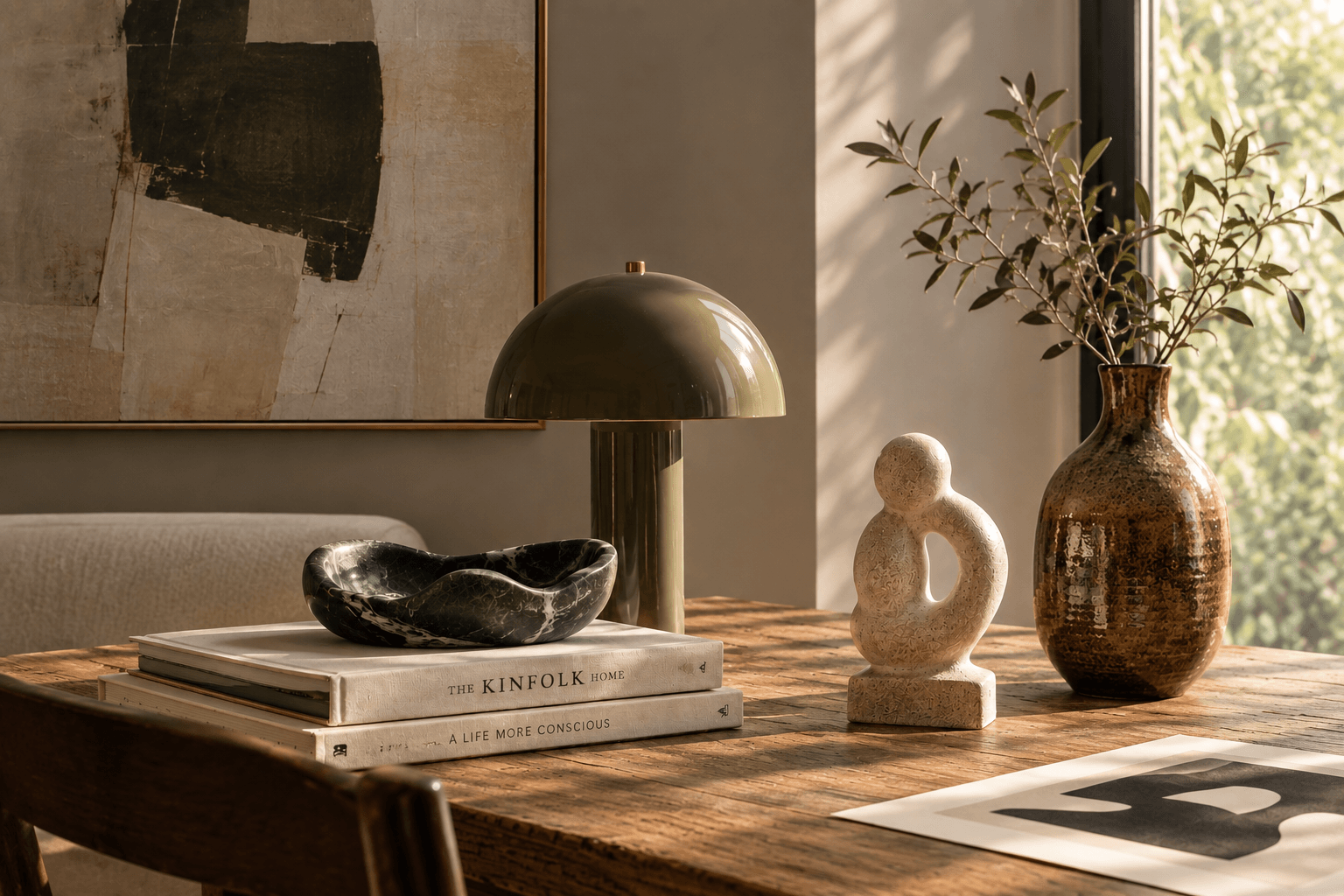
A collection of design and art for the home almost always begins long before the home itself. It begins with an object you cannot forget, with a work on paper seen in a gallery you happened to pass, with a vase found in a workshop during a journey. It might be a table lamp, a small sculpture, a catch-all tray, a container with an unusual shape. Whoever buys it is not yet furnishing: they are learning to recognize what resembles them.
We are used to thinking of the home as a starting point: you buy the property, you call the designer, you furnish. We, who deal with living spaces every day, see it differently. The home is an outcome. It is the moment when years of choices, encounters and objects finally find a space in which to live together.
The home as an outcome, not a starting point
Furnishing everything at once has a cost that is not only financial. Decisions made within a few weeks tend to resemble one another: they reflect haste and the catalog more than the person. A collection that grows over time does the opposite. It accumulates decisions, each taken calmly and for a reason, and when the home arrives, its character is already there.
So it is not about anticipating all the purchases, but about anticipating the thinking. Whoever starts collecting before having the keys is doing the hardest part of the project: understanding how they want to live, with which materials, with which light and in the company of which objects.
Collection and accumulation: a matter of intention
The difference between a collection and an accumulation is not economic value: it is intention. Accumulation answers an occasion. A collection answers a question.
Before acquiring an object it is therefore worth asking: would it hold up in a home different from the one I imagine today? Will I still be interested in it a year from now? Is there someone behind it whom I can name – an author, a designer, a workshop, a making process? And when I look at it, does it tell me something about myself or about what I am looking for?
An object that passes these questions does not necessarily have to be expensive or important. It has to be chosen. This is where a collection begins.
How to start a design collection: six rules
A personal collection should not be born from a formula, and there is certainly no correct number of pieces to own. There are, however, some criteria that help distinguish a collection destined to grow over time from a succession of purchases.
1. Start from a piece, not from a room. The first object does not necessarily need to have a definitive place already. It can be a vase, a table lamp, a container, a catchall tray or a small work of art. The question is not yet “where will I put it?”, but “would I like to keep it with me even if I changed homes?”.
2. Look for a common thread, not a match. A collection should not look coordinated. The relationship can arise from a material that returns – glass, stoneware, brass, wood – from certain shapes, from a way of working the material, from a palette, or simply from a shared attitude. The goal is not matching, but building affinities.
3. Alternate types, shapes and scales. A vase next to a small sculpture, a lamp on a side table, a catch-all tray beside a book, a container next to a work on paper create more interesting relationships than a sequence of objects that are all alike. Difference, too, is part of coherence.
4. Leave room for contrast. Different eras, origins and languages can coexist. It is often precisely an unexpected element that keeps a home from looking as though it were built all at the same moment.
5. Add only what brings something new. Before buying another piece, it is worth asking what it adds to those already owned. A material? A function? A shape? A story? If the answer is “nothing”, perhaps it is not yet the time to acquire it.
6. Leave empty space. Collecting does not mean filling. The space between objects allows us to look at them and to recognize their character. Knowing when to stop is also part of building a collection.
Nomadic objects
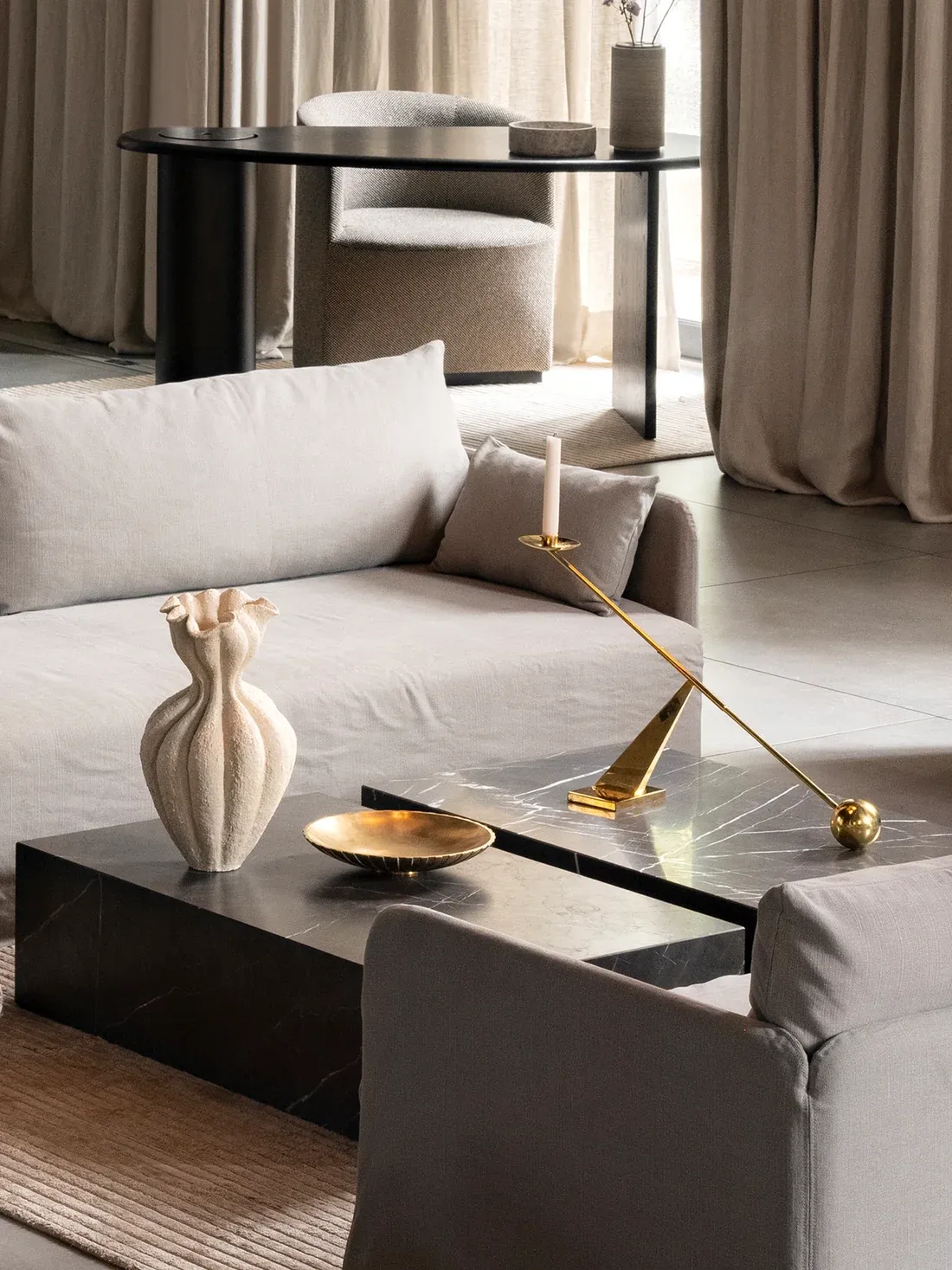
Not all objects have the same relationship with architecture. Some are naturally nomadic. A vase, a bowl, a catch-all tray, a container, a small sculpture or a table lamp can move from a console to a bookcase, from a bedside table to a side table without losing their meaning.
A portable lamp, too, can accompany its owner from one room to another and, over time, from one home to another. A floor lamp already requires more attention to proportions, but it can retain a remarkable capacity to adapt.
Other objects are instead closer to architecture. A large sofa, a dining table, a bookcase, an important rug, a curtain or a pendant light depend on the dimensions, the heights and the light of a specific space. Buying them before knowing the home often means answering a question that the home has not yet asked.
This distinction offers a first, very practical criterion: before the home, one can mainly choose the objects capable of traveling; the others can wait.
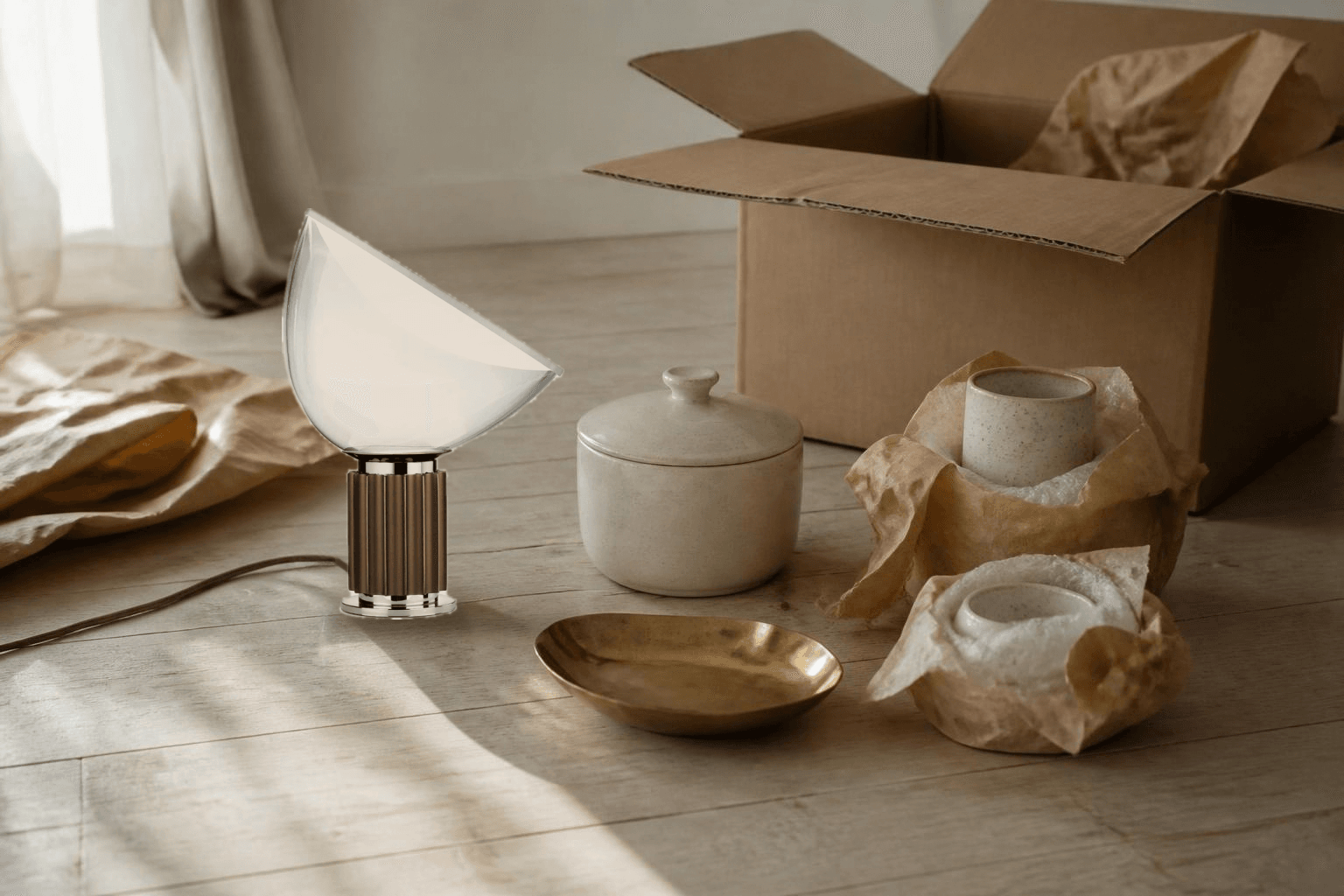
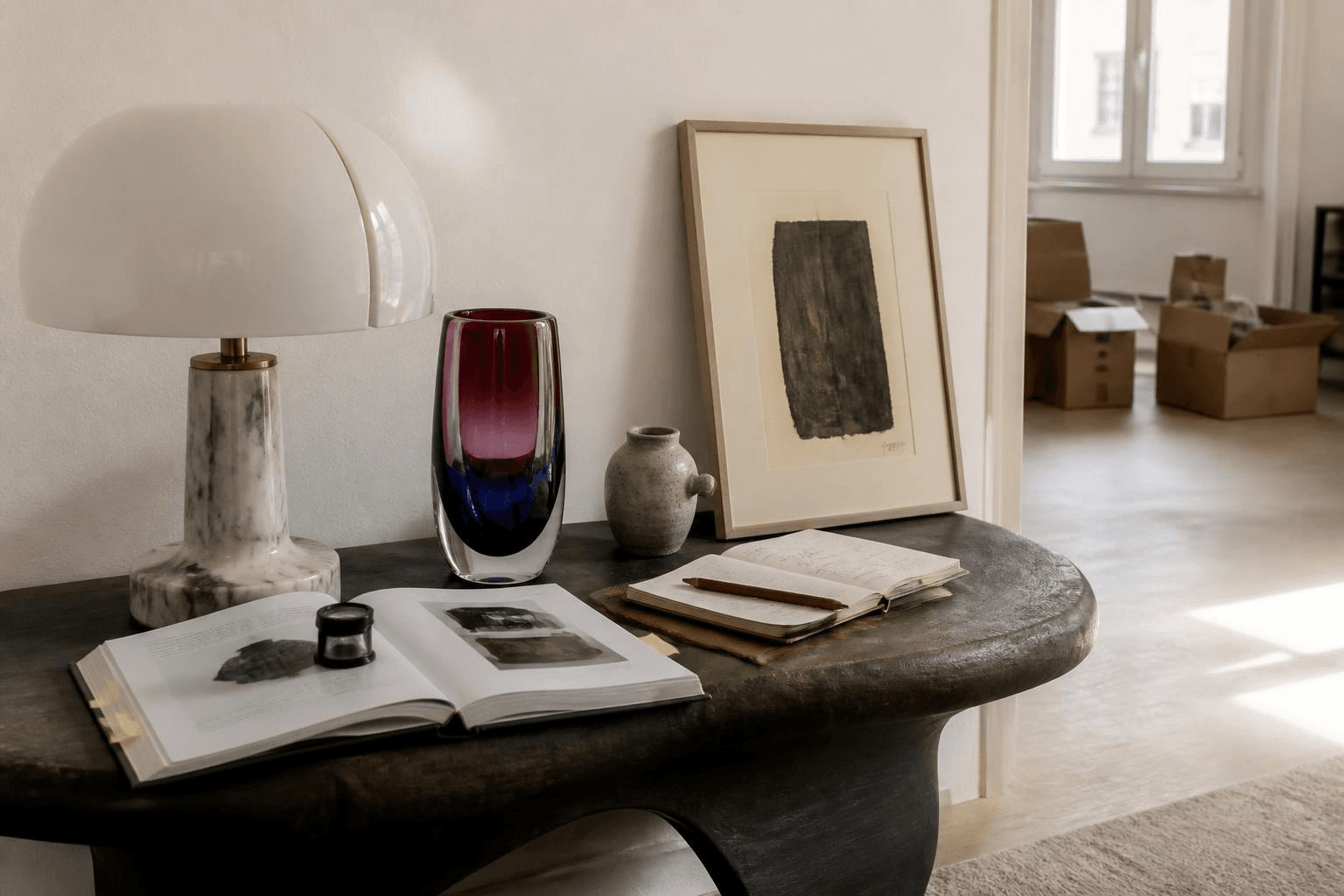
The Taccia, designed in 1962 by Achille and Pier Giacomo Castiglioni, is an example: its adjustable blown-glass diffuser returns an indirect, reflected light. It is more than sixty years old and is still in our catalog today. Another interpretation of the object that travels is the Panthella, the lamp designed by Verner Panton in 1971, here in its portable version: a light that moves along with its owner. Then there is the handcrafted. The Nasib jar, in glazed stoneware and with a lid, carries on its surface the variations of manual work. It can be a container, a vase or a sculptural presence. It does not demand a specific room: it can find many. What lasts, often, is precisely what manages to adapt without losing character.
Size, color, function: what is better not to decide too soon
There are some things that the home should be able to decide together with us. The first is size. An object of large scale is never neutral: a sofa, a large table or a bookcase asks for a space that can receive it. Buying them too early can mean ending up adapting the home to the object instead of the other way around.
Color is a subtler constraint. A piece with a very dominant color can become a promise made to the home to come, and it is not always easy to keep: tones change with the light, with the floors and with the other materials. Materials, on the other hand, tend to travel better. Stoneware, brass, glass, wood and paper react to light and surroundings without losing their identity.
Finally there is function. Before truly knowing one’s own way of living, objects capable of having more than one life are particularly interesting: a jar that becomes a vase or a container, a catch-all tray that moves from the entrance to the bedroom, a small side table that can stand next to an armchair or a bed, a table lamp that moves from the bedside to the desk, an artwork that can be leaned against a wall before it is hung. This does not mean avoiding important objects. It means distinguishing between a piece that inspires the future home and one that, because of its size or function, risks constraining it.
Art before walls
For those who collect art, a home without definitive walls can even be a freedom. Not yet having a wall on which to hang a work, one is led to look at it for what it is and not for how it will look above a sofa.
There are also forms of art that can be collected without knowing the future home: drawings and works on paper, prints and multiples in limited editions, photographs, small sculptures, ceramics by artists.
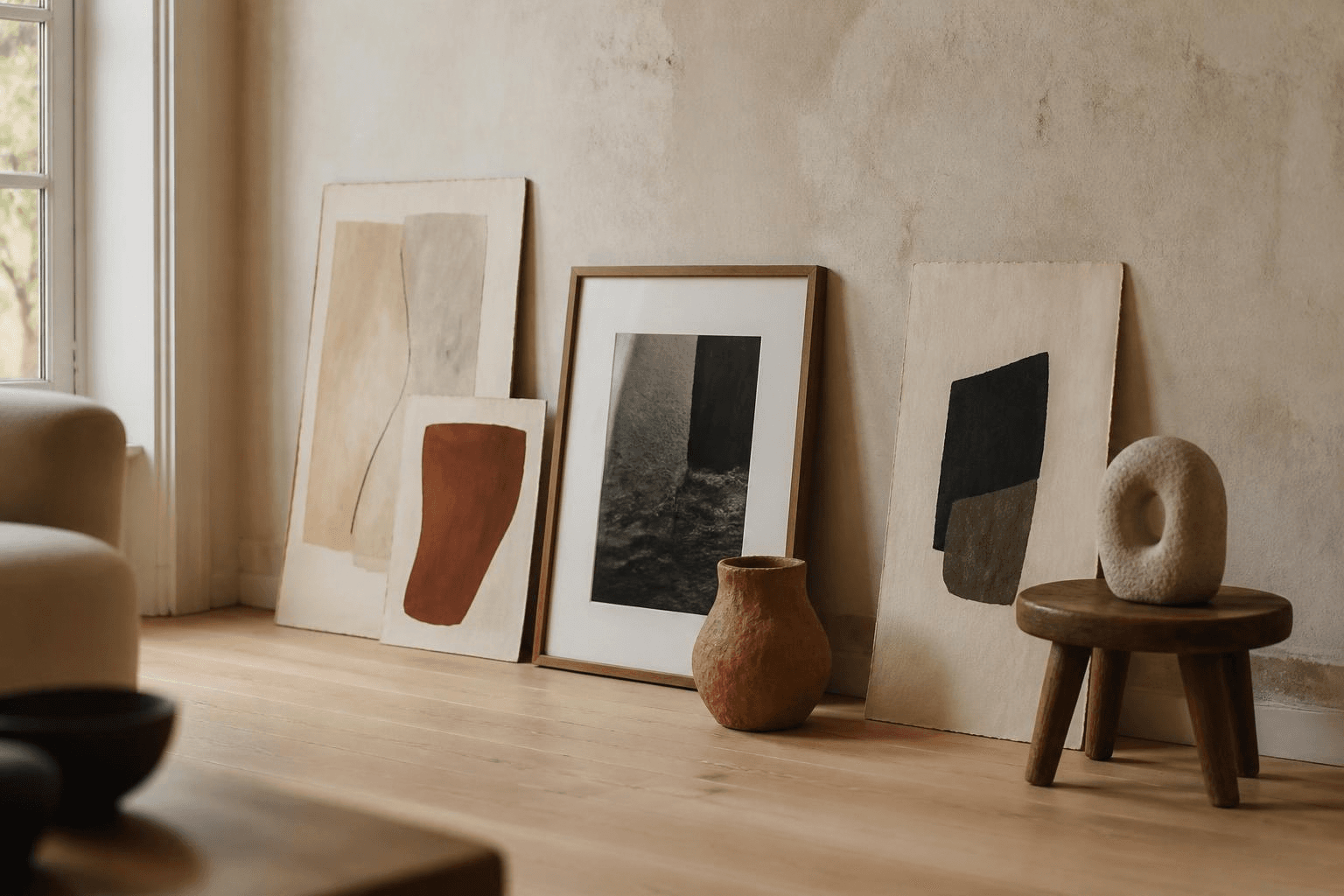
The criterion is the same as for design objects: a work should not be chosen because it “goes well” in a room, but because one wishes to live alongside it. The room will come afterward.
Every work also carries a story that is part of its value: who made it, when, with what technique, in what dimensions and, in the case of a multiple, in which edition. The invoice and the documents are kept together with the work, with the same care. It is a form of respect for what one owns and, one day, for those who will inherit its story.
Taste is a practice
Taste is not something you possess: it is something you exercise. It is formed by looking a great deal, in museums, in galleries, in studios, in workshops, in other people’s homes. And it is refined by getting things wrong, too.
Whoever collects over time has a concrete advantage: they can change their mind. They can realize that a certain material, color or language that seemed indispensable does not really belong to them, before committing to an important piece.
Memory does the rest. The strongest objects in a home are often those tied to a place, an encounter, a moment. They are not simply purchases: they are memories that have taken shape.
A collection is also this: the biography of the person who builds it, written through objects and materials.
Fashions and time
A fashion is a decision made by others and spread widely enough to seem our own. Personal collections endure because they take the opposite path: they start from an individual conviction and slowly make it visible.
To tell an authentic desire from one dictated by fashion, one can run a small experiment: ask whether we would still want that vase, that lamp, that side table or that decorative object if no one else could see it.
A collection does not have to prove that it knows the present. It has to manage to outlive it.
Buy less, buy better
Buying less does not mean giving things up, nor necessarily spending more on each piece. It means giving each choice the time it deserves. A well-chosen object is kept, repaired, moved, and sometimes handed down. It is no coincidence that the objects we remember most fondly are often those we waited for.
Buying better also means replacing rather than adding. When a new object enters the collection, one that no longer represents us can leave. This is how a collection is refined instead of swollen.
And it means accepting the wait: that distance between desire and possession in which we discover whether an object is truly necessary or was merely available.
Value, moreover, is proportional neither to size nor to price. Alessi’s Kastor, designed by Rodrigo Torres, is a pencil sharpener in chrome-plated zamak shaped like a beaver. It is tiny, ironic, functional. On a desk or on top of a side table it can have more personality than a far more important object. 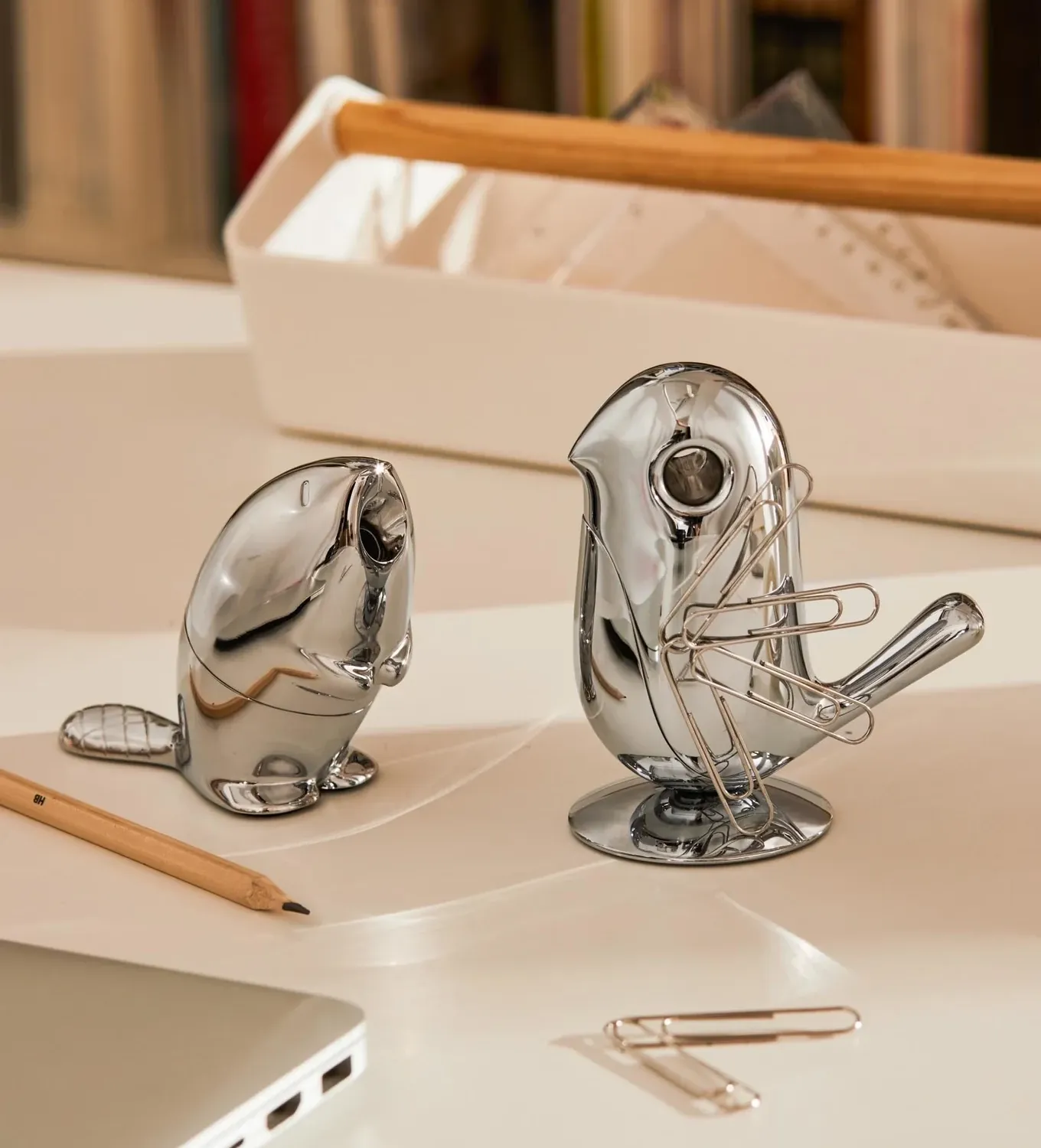
In a collection, how much space a piece occupies matters less than how much space it manages to win in memory.
A grammar before a style
How, then, do you build a coherent collection without yet knowing the spaces? Not necessarily through a style. Better to build a personal grammar.
There are the materials that recur: stoneware, blown glass, metal, brass, wood, paper. There are the shapes we are naturally drawn to: organic or geometric, slender or compact, rigorous or imperfect.
There is the relationship between solid and void. There is the quality of the making: the artisan’s hand left visible, or an almost absolute finish. And there is tone: discreet, ironic, tactile, colorful, sculptural, theatrical.
When this grammar becomes recognizable, a vase and a floor lamp, a catch-all tray and a photograph, a contemporary side table and a handcrafted ceramic can belong to the same story without resembling one another.
This is where a collection becomes personal. With a clear grammar, pieces from different eras and origins converse. Without one, even objects of great value can remain merely juxtaposed.
The piece that decides the project
Among the objects gathered over time there may be one that weighs more than the others. It might be a lamp, a ceramic, a vase, a small work, even a side table. Not because it is necessarily the most expensive piece, but because it holds something from which the future project can begin.
There is no contradiction here with the idea of not constraining the home too soon. A large sofa bought without knowing the dimensions of the living room can become a limit. A beloved lamp or work, instead, can become an inspiration.
From that piece may come the tone of a wall, the choice of a wood, a material, a light or the color of a fabric. The right object does not oblige the project: it offers it a place to start from.
When the home arrives
The day the home arrives, the collection changes role. It becomes a brief.
Whoever designs – an architect or an interior designer – receives something that would otherwise have to be reconstructed through images and questions: a language, preferences, a relationship with materials, a sensitivity to shapes and colors. One no longer starts from the abstract “what do you like?”, but from real objects, already chosen.
A vase, a table lamp, a floor lamp, a ceramic, a container, a work of art, a catch-all tray or a small side table together say far more than any definition of style.
Then patience is needed. You live in the rooms for a while before hanging everything. You observe the light at different hours of the day. You try an object on a console and then on a bookcase. A lamp changes angle, a side table changes function, a ceramic changes company.
Only then do you go back to the purchases it was right to postpone: sofas and seating, rugs, curtains, large tables, bookcases, pendant lights and all those pieces that in the real home can finally find their own measure.
Waiting, too, requires care. Objects should not be forgotten in an attic or a cellar, nor left against walls subject to strong variations in temperature and humidity. Works on paper require particular attention; ceramics and glass should be protected individually and, when available, kept in their original packaging. A photograph and a small record card with the details of each piece can become, over time, the archive of the collection.
A home that begins earlier
Furnishing does not mean filling a space. It means giving shape to a way of living, and that way of living begins to form long before the rooms.
A collection built over time lets you arrive at the home with something that no project purchased all at once can give back: a story.
A vase chosen during a journey. A lamp desired for years. A catch-all tray found almost by chance. A small work. A handcrafted container. A side table that has already lived in two homes. Different objects that, slowly, have learned to stay together.
Whoever starts collecting today, even without yet having the keys to the future home, has in a certain sense already begun to inhabit it. They do not yet know where the objects will end up. They know why they chose them.
And it is probably from there that a personal home begins.
Where to begin
To begin, the CorsoDolceVita catalog offers several territories to explore: decorative objects, table lamps, floor lamps and side tables. Not to fill a room, but to find the first object capable of staying. The collection begins where you stop to look.
Italian Aperitivo
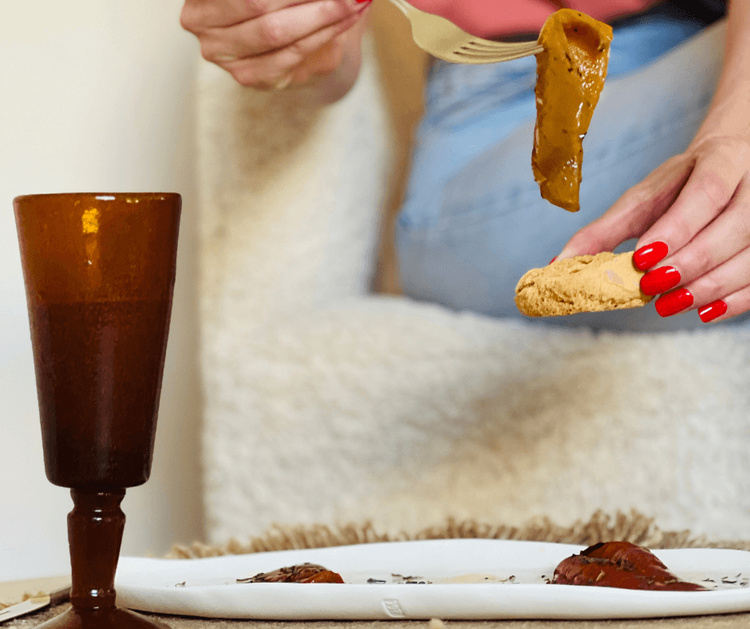
“See you at aperitivo time!” The almost sacred time between 6:00 and 9:00 p.m. A daily ritual for thousands of Italians after work, a chance to come together and enjoy a moment of conviviality.
Read the post
Collecting to Dwell: Art and Design for the Home to Come
A collection of design and art for the home almost always begins long before the home itself. It begins with an object you cannot forget, with a work on paper seen in a gallery you happened to pass, with a vase found in a workshop during a journey. It might be a table lamp, a small sculpture, a catch-all tray, a container with an unusual shape. Whoever buys it is not yet furnishing: they are learning to recognize what resembles them. We are used to thinking of the home as a starting point: you buy the property, call the designer, furnish. We, who deal with living every day, see it differently. The home is an outcome. It is the moment when years of choices, encounters and objects finally find a space in which to coexist.
Decorative objects
See all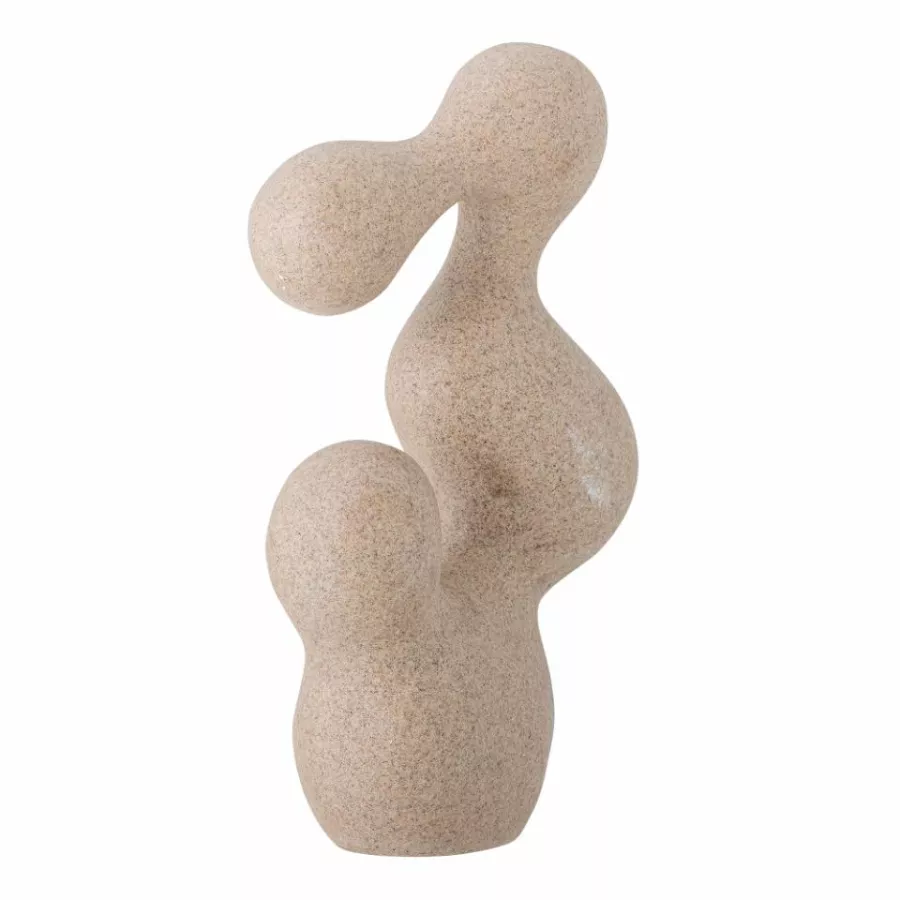
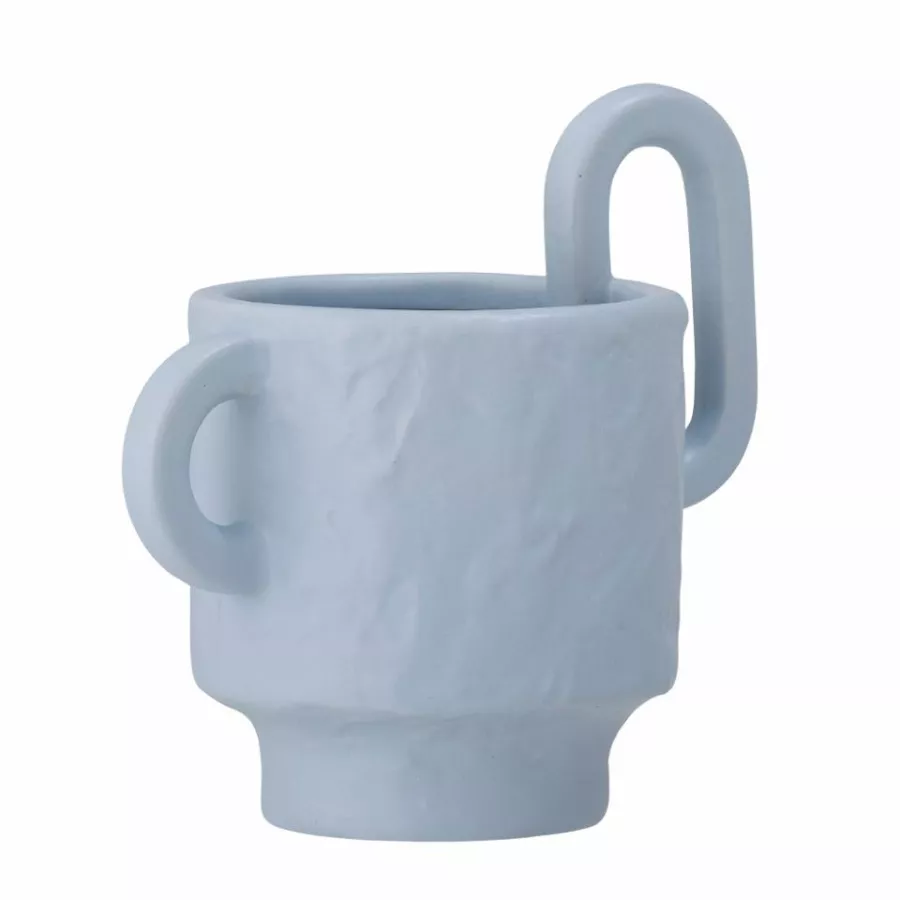

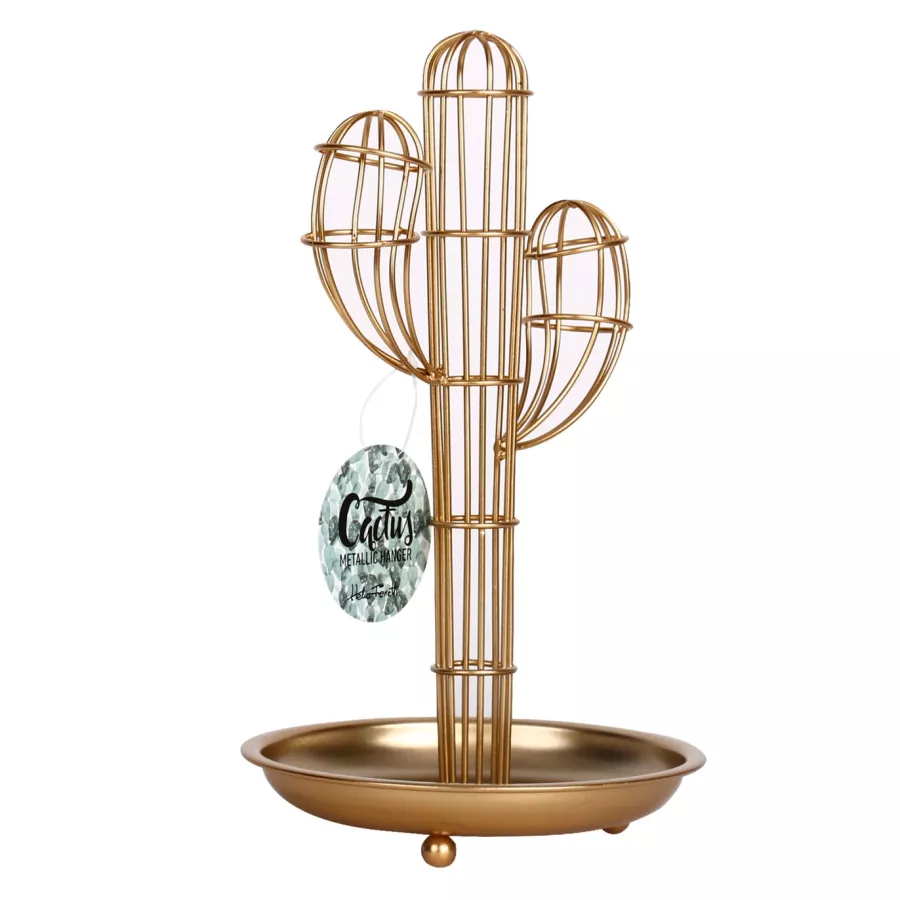
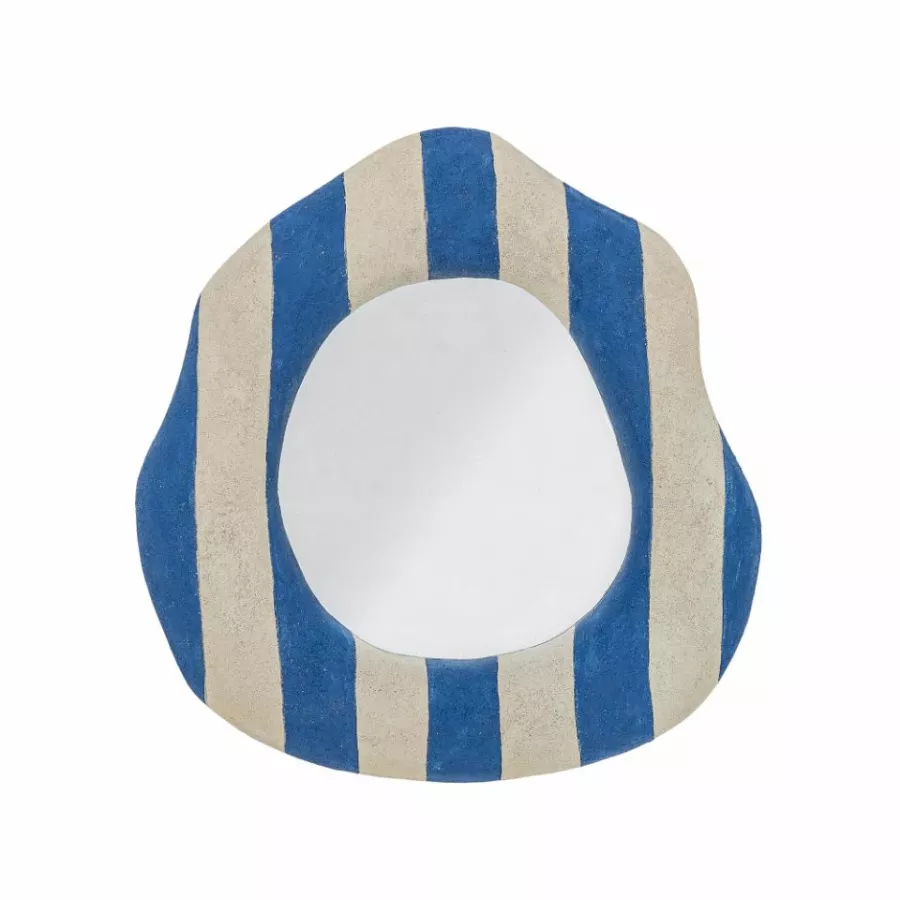
Italian Aperitivo
“See you at aperitivo time!” The almost sacred time between 6:00 and 9:00 p.m. A daily ritual for thousands of Italians after work, a chance to come together and enjoy a moment of conviviality.
Read the post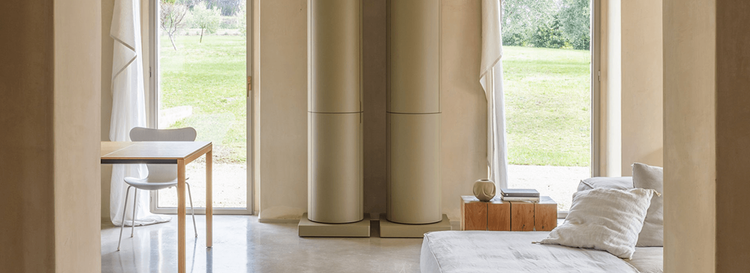
Long-lasting design – choose furniture and accessories made from high-quality materials
We live in an age where everything seems to be designed to last for a short time: trends are constantly changing, objects are made to be replaced rather than repaired, and products are often purchased for convenience rather than durability.
Read the post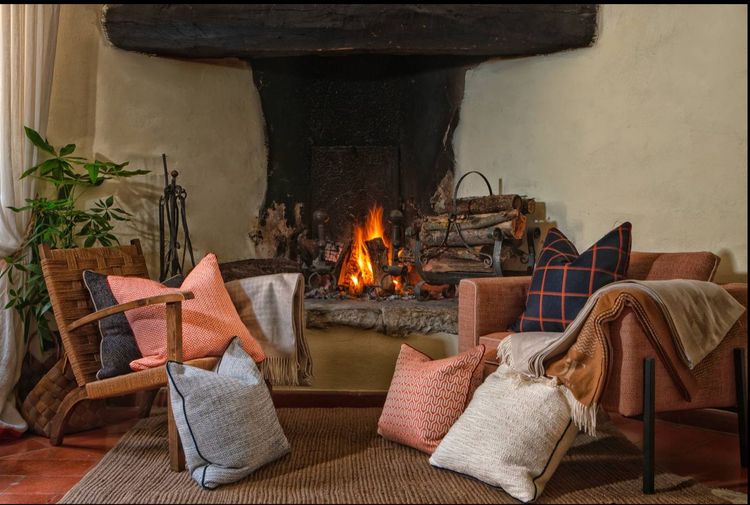
Refreshing Your Home After Summer: 5 Interior Design Ideas for a Cosy Autumn
Refreshing your home after summer does not require renovation, but rather a thoughtful approach to five elements — textiles, lighting, fragrance, accessories and spaces dedicated to relaxation — which together create the atmosphere of a cosy autumn.
Read the post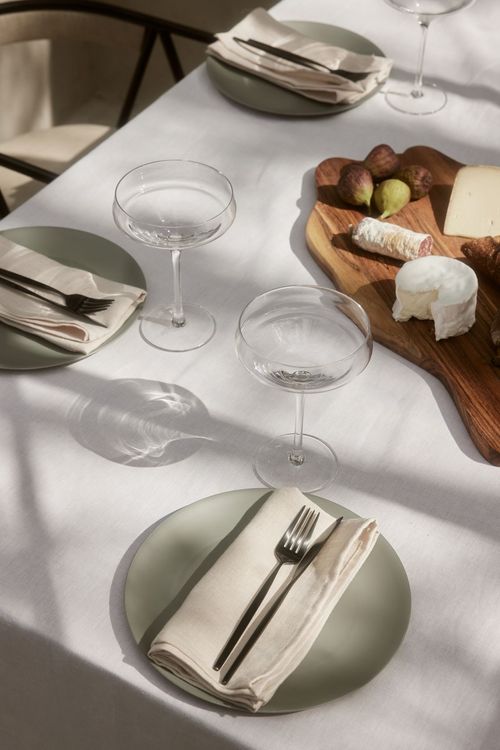
Elegant Tableware for Special Occasions: How to Choose the Perfect Set?
Every detail influences our perception of food and helps turn the time spent around the table into a memorable moment. Before diving into the table-setting process, however, it is important to take the necessary time to consider a few key factors.
Read the post